
Before Electric Lights: The Forgotten Art of Lighting Christmas Tree Candles
Christmas Eve, 1820
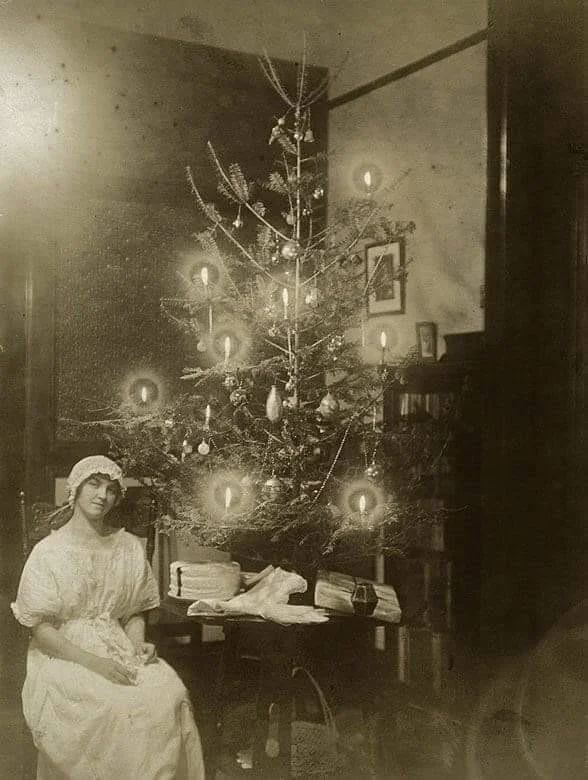
Victorian Era Christmas Tree lit wiht Candles
Picture this: It's Christmas Eve, and the children have been shooed upstairs. In the parlor below, parents are working quickly, their hands moving with practiced urgency. Small candles—dozens of them—are being clipped onto the branches of an evergreen tree that fills the room with the scent of pine and winter.
But here's the part we don't often think about: How do you light all those candles?
Today, we flick a switch and our Christmas trees blaze with light. Even if we use candles for ambiance, we reach for a lighter or a match without a second thought. But in 1820, matches didn't exist yet. So how did families light their Christmas tree candles—and more intriguingly, how did they light anything in a world before instant fire?
The answer involves a fascinating piece of woodworking history that was once as common in homes as a can opener is today: the spill plane.
The Question Nobody Asks Anymore
We all know the romantic image of candlelit Christmas trees from the 19th century. It's in paintings, stories, and our collective imagination of "old-fashioned Christmas." What we don't picture is the very practical problem that came before that magical moment: starting the fire.
Think about your own life for a second. When do you actually create fire versus transfer fire? If you light birthday candles, you probably use one candle to light the others. If you start a gas stove, you might use an existing flame. We instinctively understand that transferring fire is easier than creating it from scratch.
Now imagine a world where creating fire from nothing required significant effort—striking flint against steel, coaxing sparks into tinder, nursing an ember to life. In that world, fire wasn't something you casually extinguished and restarted. Your hearth fire was precious. It was often kept burning continuously, banked overnight, rekindled in the morning. Letting your fire go out completely meant facing the tedious process of starting over.
So when you needed to light a candle across the room, or an oil lamp upstairs, or—on Christmas Eve—dozens of small candles carefully positioned on tree branches, you didn't create new fire. You transferred fire from your hearth.
And that's where the spill plane enters our story.
The Ingenious Spill Plane
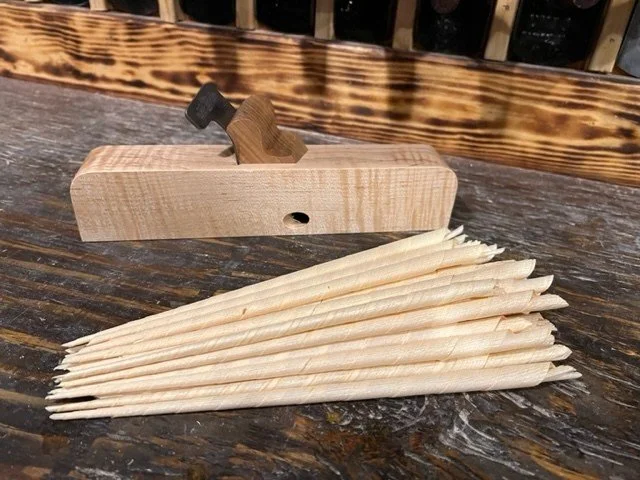
Spill Plane with Spill; Copyright Dailykos.com
Before matches became common in the late 1820s, virtually every household had a spill plane tucked near the fireplace or kitchen hearth. It was as essential as any other household tool, and for good reason.
A spill plane looks similar to other woodworking planes—those tools that shave thin layers off wood to smooth or shape it. But instead of creating a flat surface, a spill plane does something quite different and rather clever: it produces a long, tightly curled, tapered wood shaving in a single pass.
This coiled shaving is called a "spill," named for the way it literally spills out of the plane in a continuous spiral. The beauty of its design is in the details: the overlapping edges create a tapered, cone-like shape that burns slowly and steadily—much more reliably than a piece of paper or a simple wood stick.
Think of it as the precursor to the modern match, serving the exact same purpose: portable fire transfer.
How Spills Were Made and Used
The process was remarkably simple, which is partly why it worked so well for everyday life.
A household would keep small pieces of soft wood—often pine or other readily available woods—near the spill plane. When you needed to light something, you'd take a piece of wood and run it through the plane, creating a fresh spill with just one or two passes. The resulting curled shaving would be several inches long, tapered from thick to thin.
To transfer flame, you'd light the thick end of the spill from your hearth fire. The tightly coiled structure meant it burned slowly and evenly, giving you plenty of time to walk across the room, climb stairs, or—crucially for our story—move carefully from branch to branch of a Christmas tree, lighting each small candle without rushing or risking burns.
Once you'd lit your candle or lamp, you'd simply blow out the spill or let it burn down completely. Many households would make several spills at once and keep them in a container near the fireplace, ready whenever needed.
It was an elegant solution to an everyday problem we no longer have.
Lighting the Christmas Tree: A Careful Dance
Now, back to that parlor on Christmas Eve, 1820.
The tree is decorated. The candles are clipped to branches with counterweighted holders designed to keep them upright. The family has chosen their candles carefully—small ones that will burn brightly but briefly, minimizing the risk of fire spreading through the dry evergreen.
Father kneels at the hearth and runs a piece of pine through the spill plane, creating several fresh spills. He lights one from the glowing embers and begins at the top of the tree, moving quickly but carefully from candle to candle, working his way down. The process has to be fast—the spill won't burn forever, and he may need to light a second or third spill to complete the job.
Mother keeps watch, ready with water or a way to quickly extinguish any candle that threatens to ignite the branches. The whole operation requires coordination, attention, and a healthy respect for fire's power.
When the last candle is lit, they step back. The tree glows in the dim room, each flame dancing and reflecting in whatever decorations hang from the branches—perhaps paper ornaments, strings of berries, or small treasures. It's breathtaking. It's also temporary. These candles will burn for perhaps 15 or 20 minutes before they must be extinguished. The risk of leaving them longer is simply too great.
Then they call the children downstairs for the reveal.
The Daily Reality of Fire Transfer
Christmas tree lighting was a special occasion, but the challenge of transferring fire was a daily reality for households of this era.
Every time you wanted to light a candle to read by, you used a spill. Every time you needed to light a lamp to navigate dark hallways, you used a spill. Kitchen work, evening activities, checking on children at night—all required this extra step of fire transfer that we've completely forgotten in our world of instant ignition.
If your hearth fire went out overnight or was accidentally extinguished, you faced the laborious process of creating fire from scratch. This usually involved flint and steel—striking a piece of flint against steel to create sparks that would land on tinder material like char cloth, dry moss, or plant fibers. Once the tinder was smoldering, you'd use it to light a spill, which you'd then use to light kindling to rebuild your fire.
On sunny days, some households used a burning glass—essentially a magnifying lens—to focus sunlight onto tinder. In warmer months, some people used a fire piston, a device that created an ember through the compression of air.
But none of these methods were quick or convenient. They were work. Real work. Which is why keeping your fire alive and using spills to transfer flame was so much more practical for everyday life.
Why Matches Changed Everything
In 1826, English chemist John Walker created the first friction match by accident. He was stirring a chemical mixture with a stick in his laboratory when the stick caught fire after he scraped it against the floor. He realized he'd stumbled onto something remarkable.
Walker began selling his "Friction Lights" in April 1827—small sticks with tips made of potassium chlorate, antimony sulfide, and gum arabic that would ignite when scraped against sandpaper. Interestingly, he never patented his invention, which allowed others to refine and improve the design.
The impact was revolutionary. For the first time in human history, creating fire was instant, portable, and required no existing flame. You didn't need to keep a hearth fire burning. You didn't need to carry a spill from room to room. You didn't need flint and steel or the skill to coax embers to life.
Lighting Christmas tree candles became simpler and faster, though no less dangerous—the fire risk remained until electric lights replaced candles entirely in the early 20th century. But the tedious preparation of making spills and carefully transferring flame was suddenly unnecessary.
The spill plane, once an essential household tool found in virtually every home, gradually disappeared. By the mid-1800s, they were curiosities. Today, they're rare collectibles that most people have never heard of—forgotten relics of a time when fire was precious and transferring it was an art.
What We've Forgotten
There's something both humbling and fascinating about understanding how much work went into what we now take for granted. That simple act of lighting your Christmas tree—something we do with the press of a button—once required specialized tools, careful planning, coordination, and no small amount of courage given the fire risk.
The candlelit Christmas tree tradition was beautiful, but it was also brief and dangerous. Families treasured those 15 minutes of glowing magic precisely because they were fleeting and hard-won. Every lit candle represented not just the flame itself, but the knowledge and tools required to safely transfer fire through a home.
When you plug in your Christmas tree lights this year, you're participating in a tradition that's evolved dramatically. The electric bulbs that now line our trees are safer, longer-lasting, and infinitely easier to use. But they're also the latest chapter in a story that once involved spill planes, careful fire transfer, and parents working in coordinated urgency to create moments of wonder for their children.
The Woodworker's Perspective
As someone who works with wood and values traditional craftsmanship, I find the spill plane particularly fascinating. It's a specialized tool designed to solve a specific, everyday problem that no longer exists. Most planes smooth wood, shape it, or prepare it for joinery. The spill plane had one job: create the perfect wood shaving for fire transfer.
They're incredibly difficult to find today. Serious tool collectors seek them out, but they're rare enough that owning one is special. They represent a moment in history when woodworking tools weren't just for building and crafting—they were essential to daily survival and comfort.
Every household needed one. Everyone knew how to use one. And then, almost overnight in historical terms, they became obsolete.
It's a reminder that the tools we consider essential today may someday be curiosities that future generations marvel at, wondering how we ever managed with such primitive solutions.
A Different Kind of Christmas Magic
The next time you see a painting or photograph of a Victorian-era Christmas tree glowing with candles, I hope you'll think about what isn't shown in that image: the spill plane waiting near the hearth, the carefully made spills ready for lighting, the parents working quickly to bring that tree to life before calling in the children.
There was magic in those candlelit trees—not despite the effort required, but perhaps because of it. Fire was precious. Light was valuable. And creating moments of beauty and wonder for your family meant mastering the practical skills of transferring flame safely through your home.
We live in an age of instant everything. We flip switches, press buttons, and expect immediate results. And that's wonderful—I'm not suggesting we return to the days of spill planes and fire risk. Electric Christmas lights are safer, more convenient, and more environmentally sustainable.
But there's something worth remembering in these old stories: the ingenuity of people who solved everyday problems with cleverly designed tools, the value placed on moments that required effort to create, and the forgotten arts that once connected every household to the practical management of fire.
So this Christmas, as you illuminate your tree with the ease of modern technology, spare a thought for the families of 1820. They didn't have it easier. But they understood something we've lost: how much work goes into creating light from darkness, and how precious those glowing moments truly are.
The spill plane represents a fascinating intersection of woodworking, daily life, and holiday tradition—a reminder that the tools we use shape not just our work, but our entire experience of the world. Some tools become obsolete not because they weren't ingenious, but because human innovation continues to find better solutions to timeless challenges.
Gray Hill Woodworking LLC specializes in handcrafted, functional art created from locally and sustainably reclaimed wood. Each piece is unique and one-of-a-kind, celebrating the natural beauty and character found in rescued materials throughout New Jersey, Pennsylvania, New York, and Maryland.