
Acorns, Conkers, and Samaras, Oh My! The Hidden Orchestra of Fall's Seed Symphony
Neighborhood walks in the fall are different. You can hear the difference just standing in your yard. Every now and again, a tick, tonk, thud, bang, or ping… The streets and sidewalks are covered in nature's debris. What is happening?
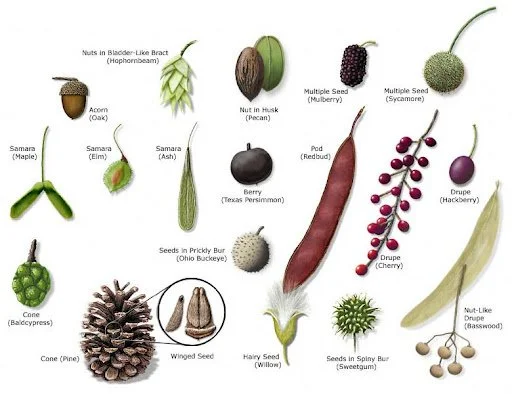
Source: Texastreeid.tamu.edu
That is the sound of fall. Many trees not only lose their leaves in the fall but also release their seeds. Seeds come in many shapes, sizes, and forms—from fleshy fruits and berries to nuts, winged seeds, fibrous pods, and cones. Each seed type was designed by mother nature to disperse in its own unique way, whether by wind, water, or animal consumption. Some seeds are only released under very specific circumstances, waiting patiently for the perfect moment to ensure their survival.
Why Fall? Nature's Perfect Timing
Why now? Why the fall? The ground reaches what we might call nature's "sweet spot" temperature—not too hot to burn the seed casing, not too cold to freeze the seed before it can germinate. These early autumn days bring beauty not just in leaf color but in trees reproducing at precisely the right time and temperature to ensure the next generation can sprout and thrive.
The timing isn't random. Trees have evolved sophisticated mechanisms to sense environmental cues: shortening daylight hours, cooling temperatures, and moisture levels all signal that it's time to release their genetic legacy. This ancient wisdom ensures that seeds have the entire winter to undergo cold stratification—a process that breaks down germination inhibitors and prepares them for spring growth.
The Great Northeast Seed Drop
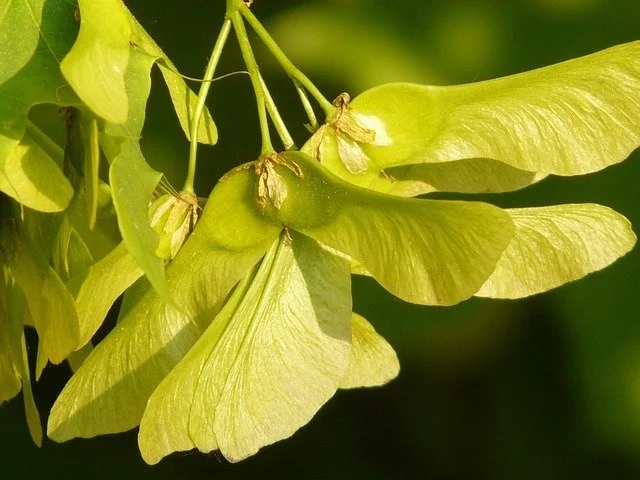
Here in the Northeast, our autumn soundscape is created by a diverse cast of native and naturalized trees, each contributing its own percussion to fall's symphony. Virtually all trees naturally disperse their seeds, but the variety is astounding.
Maples helicopter down with their distinctive "samaras"—those twin-winged seeds that spin like nature's helicopters, designed to catch wind currents and travel far from the parent tree. Sugar maples, red maples, and Norway maples all contribute to this aerial ballet, though each species has slightly different timing and wing shapes.
Oaks thunder down with their acorns, creating those satisfying "thunks" as they hit sidewalks and car roofs. White oak acorns fall and germinate quickly in their first autumn, while red oak acorns wait through winter, germinating the following spring. This staggered approach is nature's insurance policy against harsh winters or poor growing conditions.
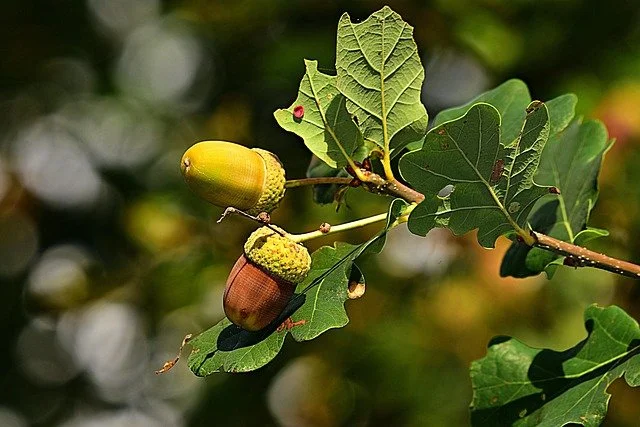
Image by 👀 Mabel Amber, who will one day from Pixabay
Black walnuts create the heaviest thuds of all—their thick, green hulls can dent cars and definitely get your attention when they land nearby. Inside that aromatic hull lies one of nature's most perfectly packaged seeds, protected by an incredibly hard shell that requires significant weathering or animal intervention to crack open.
Sweet gum trees release their spiky, ball-shaped seed pods that crunch underfoot and contain dozens of tiny winged seeds. Bradford pears drop their small fruits that, while not palatable to humans, provide crucial food sources for birds during migration season.
The Science of Seed Sounds
Each dropping sound tells a story of evolutionary engineering. The sharp crack of an acorn hitting pavement reflects its dense, concentrated nutrition—packed with enough energy to grow a mighty oak. The gentle rustle of maple samaras speaks to their delicate construction, built for flight rather than impact. Walnuts' heavy thuds announce their substantial protein and fat content, designed to sustain a tree through its vulnerable first years.
Even the timing of these sounds varies strategically. Early droppers like some oak species get first pick of prime germination spots, while later releasers like black walnuts wait for the first frost to kill competing vegetation, giving their seedlings better access to sunlight and nutrients.
Regional Variations: A Continental Perspective
While the Northeast has its characteristic autumn chorus, other regions contribute their own unique voices to fall's seed symphony. The Pacific Northwest resonates with massive Douglas fir and Sitka spruce cones, some nearly the size of footballs. Southern longleaf pines release cones that can weigh several pounds, creating thunderous crashes in southern forests.
In the Midwest, American elm trees (where they still thrive) release flat, papery seeds in late spring, while box elder maples drop their helicopter seeds throughout late summer and fall. Desert regions have their own schedule entirely—many cacti and desert trees time their seed release with monsoon seasons rather than temperature changes.
California's coast redwoods have perhaps the most patient approach of all—their tiny cones can remain closed on the tree for up to 20 years, waiting for the perfect conditions. When they finally open, they release seeds so small they're measured in milligrams, yet each carries the genetic blueprint for trees that can live over 2,000 years.
Mast Years: The Mystery of Boom and Bust
One of nature's most fascinating phenomena explains why some years bring an overwhelming deluge of acorns, walnuts, or maple seeds, while other years produce almost nothing. These "mast years" occur when trees synchronize their seed production across entire regions, creating bonanza years followed by lean periods.
The strategy is brilliantly simple: by producing massive seed crops irregularly, trees overwhelm seed predators like squirrels, chipmunks, and birds. Even the most industrious squirrel can't possibly collect and cache millions of acorns, ensuring that plenty survive to germinate. During lean years, predator populations crash, setting the stage for the next mast event.
This synchronization happens across species too—a heavy acorn year often coincides with abundant maple seeds and walnut crops. Scientists believe trees communicate through underground fungal networks and airborne chemical signals, coordinating their reproductive efforts across vast forest ecosystems. (For more on this fascinating topic, see our earlier post "Do Trees Talk? The Secret Language of Forests.")
Specialized Strategies: Nature's Most Creative Solutions
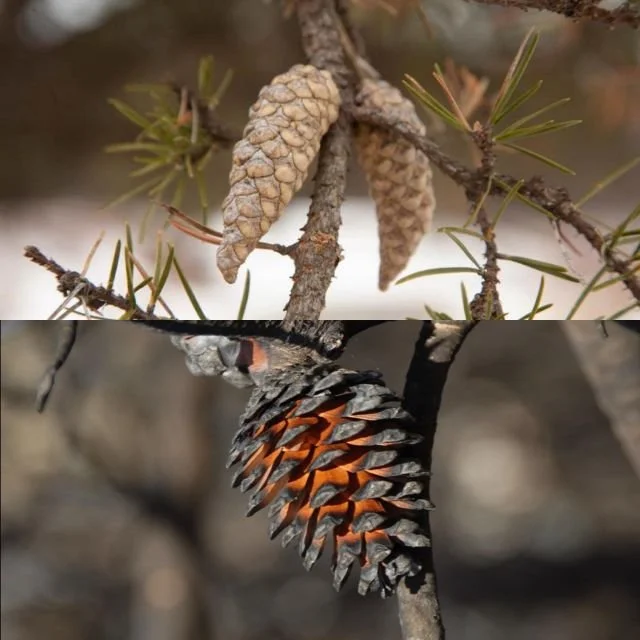
Serotinous Pinecone
Some trees have developed truly extraordinary dispersal mechanisms that seem almost fictional. Serotinous pinecones, found on species like lodgepole pine and jack pine, only release their seeds during forest fires. The intense heat melts the resin that seals the cones shut, dispersing seeds onto the charred, nutrient-rich soil that offers reduced competition and increased sunlight for new seedlings.
American basswood trees produce clusters of small, hard seeds attached to a papery bract that acts like a helicopter blade, but only after the tree has been stressed by drought or damage. Tulip poplars create cone-like structures that slowly disintegrate over winter, releasing winged seeds a few at a time during freeze-thaw cycles.
Some trees, like certain cherry species, depend entirely on animal dispersal. Their fleshy fruits attract birds and mammals, and the seeds pass through digestive systems unharmed—often emerging miles away in a perfect packet of natural fertilizer.
The Democratic Nature of Seeds
Perhaps the most remarkable aspect of this annual seed festival is its completely democratic nature. A towering oak that has weathered centuries of storms produces acorns with the same genetic potential as those from a young tree in its first reproductive year. Nature doesn't discriminate based on age, size, or location—every seed carries the complete blueprint for the next generation.
This annual reminder of renewal speaks to something profound about persistence and hope. Each falling seed represents countless years of growth, adaptation, and survival, yet willingly releases that accumulation into an uncertain future. The parent tree invests tremendous energy in seed production without any guarantee of success, trusting in the processes that have sustained forests for millions of years.
Listening to the Future
The next time you hear that familiar autumn percussion—the ticks, thunks, and pings of falling seeds—take a moment to appreciate the incredible complexity hidden in those simple sounds. Each impact represents millions of years of evolutionary refinement, a perfect balance of timing, nutrition, and dispersal strategy.
These seeds falling around us carry forward the legacy of forests that sheltered indigenous peoples, witnessed the arrival of European settlers, and have adapted to centuries of human development. Within each acorn, maple samara, and walnut lies the potential for trees that might stand for decades or centuries, providing shade, oxygen, and beauty for generations we'll never meet.
In our fast-paced world, there's something deeply grounding about this ancient rhythm. Trees don't rush their reproductive cycles or cut corners in seed development. They wait for optimal conditions, invest heavily in each seed's success, and trust in processes larger than themselves. It's a reminder that some of life's most important work happens slowly, deliberately, and with patience that spans seasons rather than moments.
As you walk through neighborhoods carpeted with nature's offerings this fall, remember that you're witnessing one of Earth's most successful strategies for survival and renewal. Every crunching step is surrounded by potential—thousands of future forests resting quietly, waiting for their moment to continue the endless cycle of growth, maturation, and generous release that has sustained our world's woodlands since long before humans walked among them.
The sounds of fall are really the sounds of hope, packaged in hard shells and papery wings, scattered with the confidence that somewhere, somehow, the future will find a way to grow.
Learn More
For readers interested in exploring these topics further, here are some excellent resources:
Tree Identification and Seed Information:
The Arbor Day Foundation (arborday.org) offers comprehensive guides to native trees and their reproductive cycles
USDA Forest Service's "Common Forest Trees" series provides detailed information about seed production and dispersal methods
iNaturalist app helps identify trees and seeds you find during your autumn walks
9billiontrees.com Tree Seed Pods Identification guide: 75 Species by Georgette Kilgore
Forest Ecology and Tree Communication:
The Nature Conservancy's website features articles on forest ecosystems and mast year phenomena
University extension services (like Rutgers Cooperative Extension for New Jersey residents) provide region-specific information about local tree species
Sustainable Forestry and Wood Use:
The Forest Stewardship Council (FSC) offers information about responsible forest management
Local sawmills and lumber recovery operations often provide insights into regional wood species and sustainable harvesting practices
Understanding these natural processes deepens our appreciation for the remarkable trees that surround us—and the precious wood they eventually provide.
Gray Hill Woodworking LLC specializes in handcrafted, functional art created from locally and sustainably reclaimed wood. Each piece is unique and one-of-a-kind, celebrating the natural beauty and character found in rescued materials throughout New Jersey, Pennsylvania, New York, and Maryland.