
The Sassafras Chronicles: One Tree's Secret Life as Forest Architect
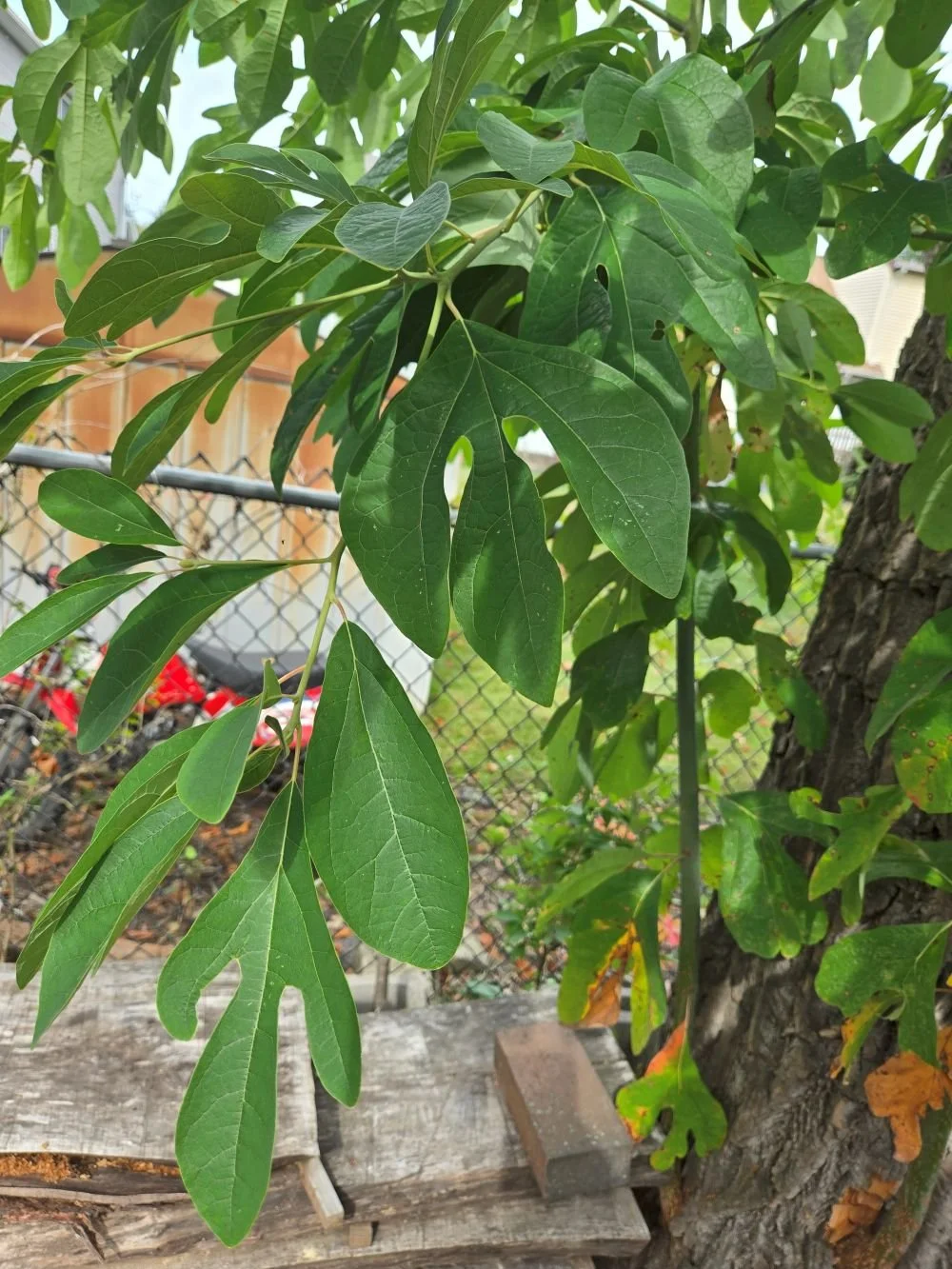
Sassafras tree - 3 different shape leaves, oval, mitten, trilobed
Source: Grayhill Woodworking
Standing at the back edge of our property, there's a sassafras tree that has become something of a neighborhood landmark. Its massive trunk reaches skyward with the confidence of a tree that knows its place in the world, but what fascinates me most isn't its impressive size—it's the mystery it creates across our yard. Nearly thirty feet away from the mother tree, small sassafras shoots emerge from the ground like nature's own popup notifications, appearing in flower beds, along the fence line, and even in the middle of our lawn. For years, I wondered: how does one tree manage to colonize such an expansive territory?
The answer, as I've discovered, reveals one of North America's most remarkable trees—a species that shapeshifts its leaves, builds underground empires, and once launched a thousand ships in pursuit of its aromatic secrets.
The Shapeshifter in Your Backyard
Most people notice sassafras first for its botanical magic trick: it's the only North American tree that produces three distinctly different leaf shapes on the same plant - unlobed oval, bilobed (mitten-shaped), and trilobed (three-pronged). Walk around any mature sassafras, and you'll find simple oval leaves, asymmetrical "mitten" leaves with a single thumb, and three-lobed leaves that look like they belong to different species entirely. This polymorphic behavior—having multiple forms—makes sassafras instantly recognizable once you know what to look for, yet endlessly confusing for amateur botanists trying to identify it for the first time.
While a few other trees exhibit some leaf variation, none do it as dramatically as sassafras. White mulberries can have variable leaves, but they lack the distinct, consistent patterns that make sassafras so unique. The three-form system isn't random—young trees and new growth tend to produce more of the mitten and three-lobed leaves, while mature branches often display more of the simple oval form. Scientists believe this variation might help the tree maximize photosynthesis in different light conditions or serve as a defense mechanism against herbivores who might recognize and target specific leaf shapes.
The Underground Empire
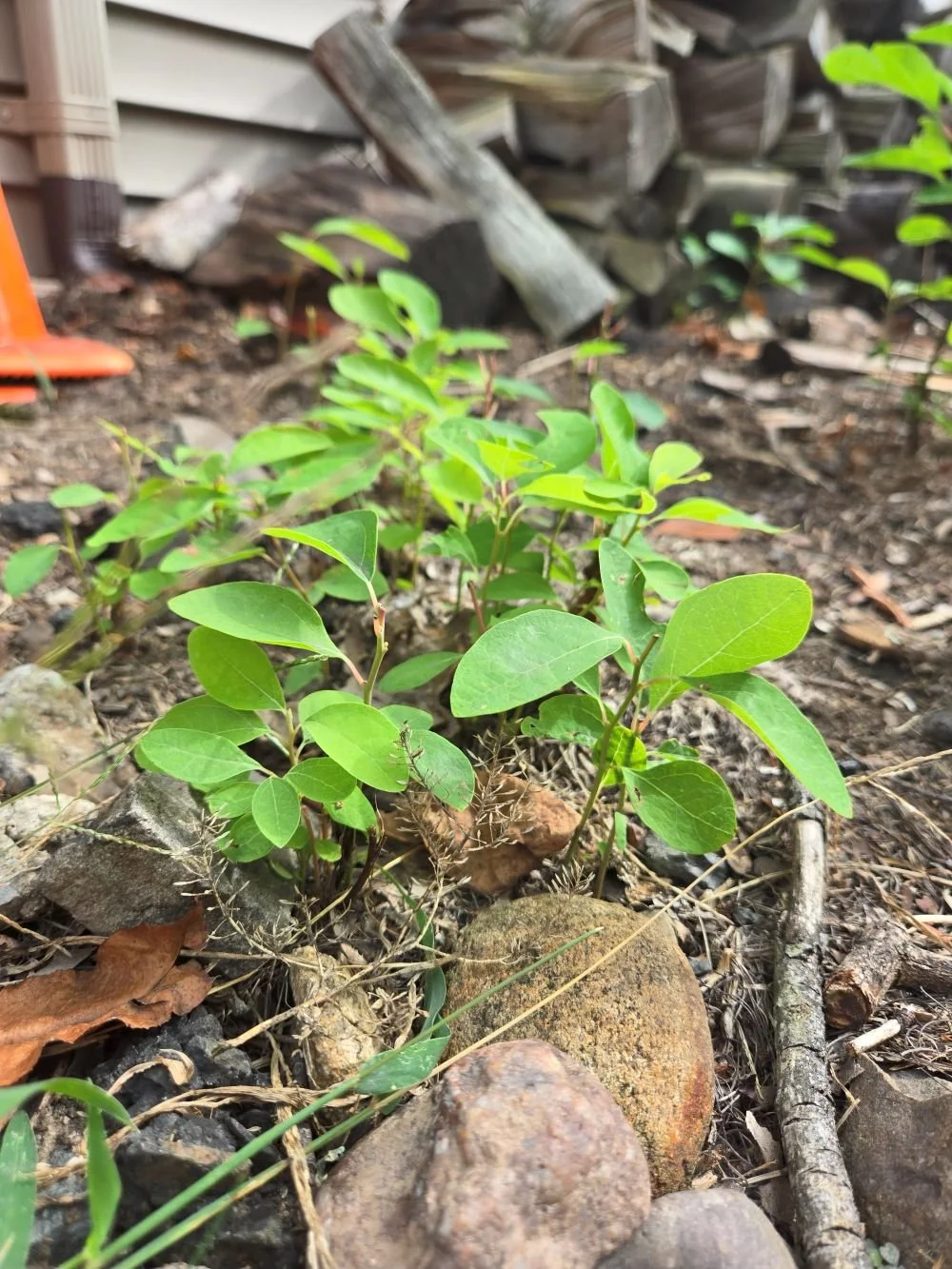
Sassafras root suckers colony
Source: Grayhill Woodworking LLC
But the real magic happens beneath the surface. That collection of young sassafras shoots scattered across our property aren't separate trees at all—they're all part of the same organism. Sassafras trees are master architects of underground real estate, sending out horizontal roots that can travel dozens of feet from the parent tree before sending up new shoots. These "suckers" or root sprouts create what botanists call a clonal colony—genetically identical copies of the original tree, all connected by a vast underground network.
This survival strategy is brilliant in its simplicity. If the main tree is damaged by storm, fire, or human activity, the satellite shoots can continue the genetic line. If environmental conditions change in one area, other parts of the colony might thrive. It's like having multiple backup copies of your most important files stored in different locations.
The root system also explains why sassafras can be both a gardener's delight and nightmare. While the aromatic leaves and brilliant fall color make it a desirable landscape tree, those persistent suckers require constant management if you prefer a more manicured yard. Some property owners find themselves in a decades-long negotiation with their sassafras, attempting to contain its territorial ambitions while appreciating its unique beauty.
A Tree That Changed History
Few North American trees can claim to have influenced global exploration like sassafras. When European explorers first encountered this aromatic species in the late 1500s, they believed they had discovered a miracle cure. The tree became highly valued in European markets, where sassafras root and bark were sought after for medicinal purposes, particularly for treating fevers and other ailments, while the aromatic wood was prized by craftsmen and shipbuilders.
The name "Sassafras", applied by the Spanish botanist Monardes in the sixteenth century, is said to be a corruption of the Spanish word for "saxifrage", reflecting the European fascination with this New World botanical treasure. Sassafras was believed to be a cure-all by early settlers, treating everything from syphilis to rheumatism. Its popularity in Europe marked the beginning of its integration into global trade, showcasing its perceived value across cultures.
The economic value of sassafras was so significant that it helped fund some of the earliest colonial ventures. Ships would return to Europe loaded with sassafras root, bark, and wood, generating profits that supported further exploration and settlement. For a brief period, sassafras was literally worth its weight in silver in European markets.
Indigenous Wisdom and American Innovation
Long before European colonists arrived, Native American tribes understood the value of sassafras. Indigenous peoples across North America used various parts of the sassafras tree for medicinal purposes and as a cooking ingredient. The Choctaw were among the tribes that used dried, ground sassafras leaves as both a seasoning and a thickening agent for soups and stews.
Sassafras root was used by indigenous peoples to make an aromatic and pleasant-tasting tea. The root has a strong, distinctive taste, and European settlers referred to it was "root tea". This indigenous knowledge became the foundation for one of America's most distinctive beverages.
The origins of root beer date to these early interactions between Native Americans and European colonists. Early Europeans crafted root beer by boiling sassafras roots along with a variety of other herbs and spices. Common ingredients included wintergreen, sarsaparilla, ginger, and licorice root. In the late 19th century, sassafras tea evolved into a refreshing soft drink, thanks to Philadelphia-based pharmacist, Charles Hires. Aromatic sassafras root bark was one of many botanical ingredients in Hires original root beer recipe, which was promoted as a healthy alternative to hard liquor.
The transition from medicinal tea to commercial soft drink represents a uniquely American innovation—taking traditional indigenous knowledge, combining it with European techniques, and creating something entirely new that would become a cultural icon.
The Modern Sassafras: Fall's Theatrical Star

Today, sassafras continues to captivate observers, particularly during autumn when it puts on one of nature's most spectacular color shows. While many trees settle for a single autumn hue, sassafras paints itself in a full palette: brilliant yellows, vibrant oranges, and deep reds, sometimes all on the same tree. The color intensity rivals that of sugar maples, but with a wild, unpredictable quality that reflects the tree's shapeshifting nature.
The fall display serves an important ecological function beyond mere beauty. As temperatures drop and daylight hours decrease, the tree begins shutting down chlorophyll production in preparation for dormancy. But this is also when the root system becomes most active, sending nutrients to support the expanding underground network and preparing to send up new shoots when spring returns.
This seasonal cycle explains why those mysterious suckers often seem to appear overnight in early spring. The energy stored in the extensive root system during fall and winter powers rapid growth when conditions become favorable. For property owners, this means that managing sassafras suckers is most effective during the dormant season, before the roots fully energize the next generation of shoots.
Working with Sassafras Wood: A Craftsman's Perspective
Having had some tree work done on our massive sassafras this year, I've been able to explore the wood's properties firsthand as I wait for the logs to dry to my preferred moisture content of below 10%. Sassafras wood offers some unique characteristics that make it both appealing and challenging for artisans.
Sassafras has a coarse grain pattern much like oak, but with open grain, soft texture and light brown color. Hardness averages 630 pounds (one-half of red oak), making it significantly softer than many hardwoods commonly used in furniture making. This softness is both an advantage and a challenge—it is soft enough to cut easily with hand tools, and it machines well. However, the wood is slightly brittle and prone to splintering and tearout, so pay close attention to grain direction when surfacing.
The aromatic quality that made sassafras famous persists in the dried wood, creating a pleasant workshop experience that few other species can match. Sassafras wood is used for furniture, outdoor projects like fences and garden furniture, interior trims, tool handles, and artistic crafts like bowls and carvings. Its natural decay resistance makes it particularly valuable for outdoor applications, while the distinctive grain pattern and aromatic properties make it sought after for specialty items.
Historically, the wood of sassafras trees has been used as a material for building ships and furniture in China, Europe, and the United States, prized for both its workability and durability. Sassafras lumber is widely used for furniture, kitchen cabinetry, fence posts, and boatbuilding, demonstrating its versatility across different applications.
For artisans working with reclaimed or sustainably sourced wood, sassafras offers an opportunity to create pieces with both historical significance and unique sensory appeal. The wood's story—from Native American medicine to colonial commerce to modern craft—adds layers of meaning to any finished piece.
Lifespan and Legacy
Sassafras trees typically live 50 to 100 years, though some specimens can reach 150 years or more under ideal conditions. However, the clonal colony system means that individual sassafras genotypes can persist for centuries, possibly millennia, through their underground networks. The tree you see might be relatively young, but the genetic line could be ancient.
This longevity system creates interesting implications for woodland management and conservation. A single sassafras colony can occupy several acres, representing not just multiple trees but potentially centuries of continuous occupation of the same site. When mature sassafras trees are removed, the root system often responds by producing numerous new shoots, sometimes creating denser stands than existed before.
Seasonal Rhythms and Root Beer Trees
As we move through autumn and the sassafras in our yard begins its annual color transformation, those mysterious suckers across the property are preparing for their winter dormancy. The underground network that connects them all continues its slow, patient work of expansion and resource sharing, embodying a different sense of time than our human-scale seasonal rhythms.
Sassafras twigs have been used as toothbrushes and fire starters, reminding us that this tree has served human needs in countless ways throughout history. From the Native American communities who first understood its properties to the colonial entrepreneurs who shipped it across oceans, from the pharmacists who transformed it into America's distinctive soft drink to the modern woodworkers who appreciate its unique characteristics, sassafras continues to play multiple roles in our relationship with the natural world.
Living with a Sassafras Colony
Managing a property with an active sassafras colony requires a shift in perspective. Instead of viewing those persistent suckers as invaders, it helps to understand them as part of a single, complex organism expressing its fundamental nature. The tree isn't trying to take over your yard—it's simply doing what sassafras trees have done for thousands of years: creating resilient, interconnected communities that can survive whatever challenges the environment presents.
For homeowners and land managers, this might mean working with the tree's natural tendencies rather than fighting them. Strategic pruning of suckers can direct the colony's energy while maintaining the parent tree's health. Understanding the root system's extent helps in planning other landscaping projects. And appreciating the historical and ecological significance of sassafras can transform what might seem like a maintenance headache into a living connection to both natural and human history.
The next time you encounter a sassafras tree—whether it's the shapeshifting leaves that first catch your attention, the brilliant fall colors that stop you in your tracks, or the mysterious appearance of new shoots far from any visible parent tree—take a moment to appreciate the complexity hidden beneath that familiar exterior. You're not just looking at a tree; you're observing a master strategist, a historical celebrity, and a living link to the deep ecological wisdom that has sustained forests for millennia.
In our fast-paced world, there's something profoundly grounding about connecting with species that measure time in decades and plan projects that span centuries. The sassafras in our backyard reminds us daily that the most successful life strategies often involve patience, persistence, and the wisdom to establish deep roots while remaining flexible enough to adapt and spread when opportunities arise.
Learn More
For readers interested in exploring sassafras and other native trees further:
Tree Identification and Native Species:
The Arbor Day Foundation's Native Tree Database provides comprehensive information about sassafras distribution and growing conditions
Your state's cooperative extension service offers region-specific guidance on managing native tree species
iNaturalist app helps identify sassafras trees and track their seasonal changes
Historical and Cultural Information:
The Smithsonian's National Museum of American History has exhibits on the role of sassafras in early American commerce
Local historical societies often have records of sassafras harvesting and early root beer production in your area
Wood Properties and Uses:
The Wood Database provides detailed technical specifications for sassafras lumber
Regional sawmills and specialty lumber dealers can source sustainably harvested sassafras for woodworking projects
Woodworking forums and communities share experiences working with this unique aromatic wood
Understanding these remarkable trees deepens our appreciation for the forests that surround us—and the precious wood they eventually provide to those who work with nature's gifts.
Gray Hill Woodworking LLC specializes in handcrafted, functional art created from locally and sustainably reclaimed wood. Each piece is unique and one-of-a-kind, celebrating the natural beauty and character found in rescued materials throughout New Jersey, Pennsylvania, New York, and Maryland.